


본문
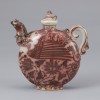
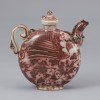
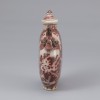
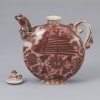
원나라 황제나 귀족의 고분에 있던 부장품인 '명기(明器)'로 추정되는 유리홍 단봉문 편주자입니다. 납작한 원형의 몸체 좌우에 봉황 머리 모양의 출수구와 손잡이가 붙어 있고, 위아래로 연봉 모양의 뚜껑이 있는 입수구(구연부)와 장방형의 굽이 붙어 있습니다. 출수구의 봉황 머리는 몸체의 커다란 날개 무늬로 연결되어 마치 봉황이 하늘을 나는 듯한 인상을 줍니다. 봉황은 태평성대에 나타나는 상서로운 상상의 동물로서 천자(天子)를 상징하며, 하부에 그려진 모란은 꽃이 크고 풍성해 부귀영화를 나타냅니다.
이러한 무늬를 장식한 기법인 유리홍은 유약 밑에 붉은 그림이 있다는 뜻으로 붙여진 명칭으로 산화동이 고온에서 환원되면서 붉게 착색되어 나타나고, 붉은색을 띠어 동화(銅畫)로도 불리는 도자 기법입니다. 유리홍은 원나라에서 청화자기 제작과 더불어 14세기에 크게 유행하였으며 경덕진 일대를 포함한 강남 지역의 전란으로 인해 청화 안료의 수입이 중단된 뒤에는 청화자기를 대체했습니다. 이 유리홍 주자는 이러한 원대 도자사의 변천을 반영한 귀중한 유물로 사료됩니다.
━━━━━
据推测,该釉里红丹凤纹扁执壶是元朝皇帝或贵族古墓中的陪葬品"明器",圆形扁腹。肩部一侧置饰凤首形弯流,另一侧置曲柄。上有莲花形状盖子的入水口(口沿部),下有长方形底足。出水口的凤首连接着身体的大翅膀花纹,使人联想到凤凰在空中飞舞。 凤凰是太平盛世出现的吉祥动物,象征天子,该釉里红壶身绘大而茂盛的牡丹花,象征富贵荣华。
釉里红是釉下有红色图案而得名,是氧化铜在高温还原焰呈红色,也被称为铜画的一种陶瓷装饰法。釉里红在元代随着青花瓷的制作,在14世纪非常流行,包括景德镇一带在内的江南地区的战乱导致青花颜料进口中断后,取代了青花瓷。该釉里红执壶被认为是反映元代陶瓷史变迁的珍贵文物。
━━━━━
This Underglaze Red Flattened Ewer with Phoenix Design is presumed to be a mingqi (明器, burial object) originally placed in the tomb of a Yuan Dynasty emperor or aristocrat. The vessel features a flattened circular body flanked by a spout shaped like a phoenix's head and a handle. It is topped with a mouth featuring a lotus-bud-shaped lid and rests on a rectangular foot. The phoenix head on the spout connects visually to large wing motifs on the body, creating the impression of a phoenix in flight. As an auspicious mythical creature said to appear during times of peace and prosperity, the phoenix symbolizes the Son of Heaven (the Emperor). The peonies depicted on the lower section, with their large and full blossoms, symbolize wealth and honor.
The decorative technique used here, known as Youlihong (underglaze red), is named for the red designs painted beneath the glaze. It is a ceramic technique—also referred to as Donghua (銅畫, copper painting)—in which copper oxide pigment turns red through high-temperature reduction firing. Underglaze red became highly popular in the 14th century during the Yuan Dynasty, alongside the production of blue and white porcelain. It notably served as a substitute for blue and white wares when imports of cobalt blue pigment were interrupted by warfare in the Jiangnan region, including Jingdezhen. Consequently, this ewer is regarded as a valuable artifact that reflects these significant transitions in the history of Yuan ceramics.