본문
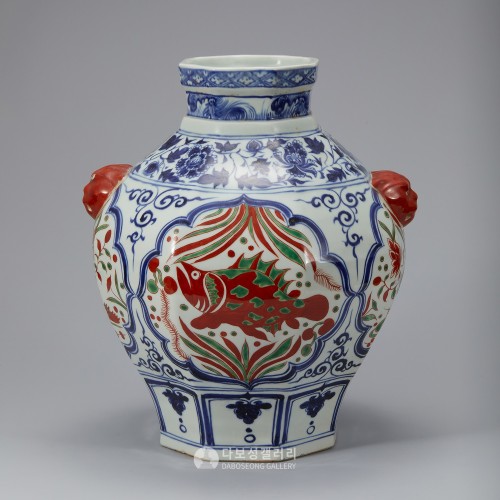
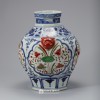
오채 기법으로 수초와 물고기를 시문한 어조문(魚藻紋) 관입니다. 오채는 고화도 소성한 백자 또는 청화백자에 다양한 색상으로 문양을 그린 뒤 저화도 소성하여 완성하는 유상채(釉上彩) 자기입니다.
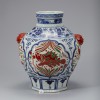
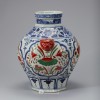
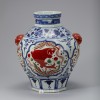
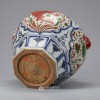
8개의 능선으로 구분되어 각을 이루며, 어깨 양쪽에 서수 얼굴 모양의 귀를 부착하였습니다. 동체에는 4개의 능화형(菱花形) 화창(花窓)을 냈습니다. 두 개의 화창에는 연못을 떠다니는 한 쌍의 원앙을, 나머지 두 개의 화창에는 수초 사이로 유영하는 붕어와 쏘가리를 각각 그려 넣었습니다. 이 밖에도 파문(波紋), 모란당초문(牡丹唐草紋), 연판문(蓮瓣紋) 등의 부속 문양을 시문하였습니다.
중국 문화에서 물고기 어(魚)는 남을 여(餘)와 발음이 같아 여유와 풍요를 상징하고, 쏘가리를 칭하는 궐(鱖)은 대궐 궐(闕)과 발음이 같아 궁궐과 입신양명을 의미하며, 원앙은 부부의 화합을 상징합니다. 또한 연꽃은 연이을 연(連)과 발음이 같아 문양이 나타내는 길상적 의미가 계속되길 기원하는 뜻을 담고 있습니다.
특히 어조문 등의 길상문은 황실 유물에 자주 사용되었으며, 소성 난이도가 높은 팔각 기형으로 제작된 점을 고려할 때 황실에서 사용한 유물로 추정됩니다.
━━━━━
罐身以五彩技法描绘鱼藻纹。五彩是在高温烧制的白瓷或青花瓷上以多种色彩绘制纹样,再经低温烧制而成的釉上彩。
器身以八条棱线分隔,形成八面,并在肩部两侧饰有兽首耳。器身开设四个菱花形花窗,其中两面花窗内绘池塘中悠游的一对鸳鸯,另外两面花窗则分别绘水草间游弋的鲫鱼与鳜鱼。此外,还饰有波纹、缠枝牡丹纹、莲瓣纹等辅助纹样。
在中国文化中,“鱼”与“余”同音,象征富余与丰足;鳜鱼之“鳜”与宫阙之“阙”同音,寓意宫阙与仕途显达;鸳鸯则象征夫妻和睦。莲花又与“连”同音,寄托了对纹样所蕴含的吉祥寓意绵延不断、福运相连的美好祈愿。
尤其是鱼藻纹等吉祥纹样,常见于宫廷御用器物。再考虑到此器为烧制难度较高的八棱形制,因此推测其应为宫廷使用的器物。
━━━━━
This jar is decorated with fish and aquatic plants in the wucai technique. Wucai is a type of overglaze decoration in which various colors are painted onto high-fired white porcelain or blue-and-white porcelain, followed by a second firing at a lower temperature to complete the decoration.
The jar is faceted into eight sides and has handles attached to both sides of the shoulder in the form of auspicious beast faces. Four lobed panels are set on the body. Two of the panels depict a pair of mandarin ducks floating on a pond, while the other two depict crucian carp and mandarin fish swimming among aquatic plants. Additional decorative motifs, including wave patterns, peony scrolls, and lotus-petal patterns, are also applied.
In Chinese culture, the word for fish, yu (魚), is pronounced the same as the word for abundance, yu (餘), and thus symbolizes prosperity and abundance. The character gui (鱖), used for mandarin fish, is pronounced the same as the character que (闕), meaning a palace or imperial court, and therefore conveys wishes for advancement and success. Mandarin ducks symbolize marital harmony. The lotus, meanwhile, is pronounced the same as lian (連), meaning to continue or connect, and thus conveys a wish that the auspicious meanings represented by the motifs will continue.
Auspicious motifs such as fish and aquatic plants were frequently used on imperial objects. Considering that this jar was made in an octagonal form, which is technically difficult to fire, it is presumed to have been an object used by the imperial court.