본문
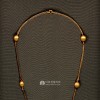
삼국시대에 제작된 금제 목걸이입니다. 우리나라에서 목걸이는 청동기시대부터 사용되었으며, 고분시대 이후로는 금·옥·유리 등 각종 재료를 사용한 목걸이가 출토되었습니다. 특히 삼국시대에는 장신구가 신분과 권위를 상징하는 중요한 표식으로 기능하였습니다.
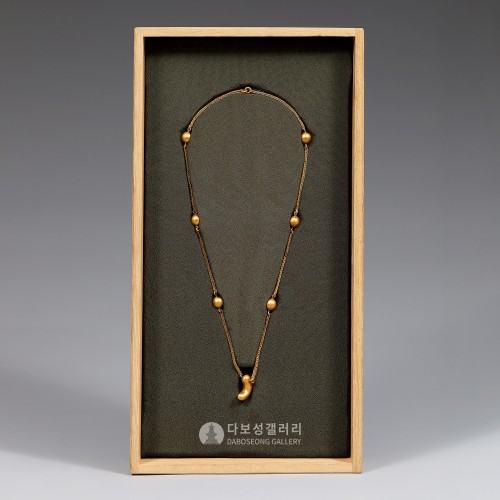
금실을 정교하게 꼬아 만든 사슬 네 줄과 속이 빈 금구슬 세 개를 교대로 연결한 구성입니다. 중앙에는 곡선형으로 굽은 곡옥(曲玉) 형태의 금제 장식이 달려 있습니다. 곡옥 형태는 선사시대부터 지속적으로 사용되었으며, 생명력과 재생, 권위, 신성성 등을 상징합니다.
경주 지역 신라 고분에서 출토된 목걸이들은 주로 푸른빛의 굽은 옥을 사용한 데 비해, 이 유물은 전체를 금으로 제작한 점이 특징입니다. 국보 제194호 <황남대총 남분 금목걸이>와 유사한 구조와 제작 기법을 갖추고 있습니다. 신라 금제 목걸이의 뛰어난 완성도와 삼국시대 귀족층의 미적 감각을 집약적으로 보여주는 유물로 평가됩니다.
━━━━━
此金项链制作于朝鲜三国时代。在韩国,项链自青铜时代起便已使用,高坟时代以后,采用金、玉、琉璃等多种材质制作的项链陆续出土。尤其在朝鲜三国时代,首饰作为身份与权威的重要象征。
该项链以四股精细绞制的金丝链与三枚中空金珠交替连接而成。中央悬挂一枚弯曲的曲玉形金饰。曲玉形制自史前时代起便持续使用,象征生命力、重生、权威与神圣性。
与庆州地区新罗古墓中多以青色曲玉为主要装饰的项链相比,此件作品通体以黄金制成,尤为罕见。其结构与制作工艺与国宝第194号《皇南大冢南坟金项链》高度相似。该器物集中展现了新罗金项链卓越的工艺水平以及三国时代贵族阶层的审美意识。
━━━━━
This is a gold necklace produced during the Three Kingdoms Period. In Korea, necklaces have been used since the Bronze Age, and since the era of ancient tombs, necklaces made of various materials such as gold, jade, and glass have been excavated. In particular, during the Three Kingdoms Period, jewelry functioned as an important symbol of social status and authority.
The necklace is composed of four strands of intricately twisted gold wire chains connected alternately with three hollow gold beads. Hanging in the center is a gold ornament in the shape of a curved jade. The curved jade shape has been used continuously since prehistoric times and symbolizes vitality, rebirth, authority, and sanctity.
While necklaces excavated from Silla tombs in the Gyeongju region typically featured blue curved jades, this artifact is distinguished by being crafted entirely from gold. It features a structure and manufacturing technique similar to that of National Treasure No. 194, the Gold Necklace from the South Mound of Hwangnam Daechong Tomb. This piece is evaluated as an artifact that epitomizes the exceptional craftsmanship of Silla gold necklaces and the aesthetic sensibilities of the aristocracy during the Three Kingdoms Period.
