본문
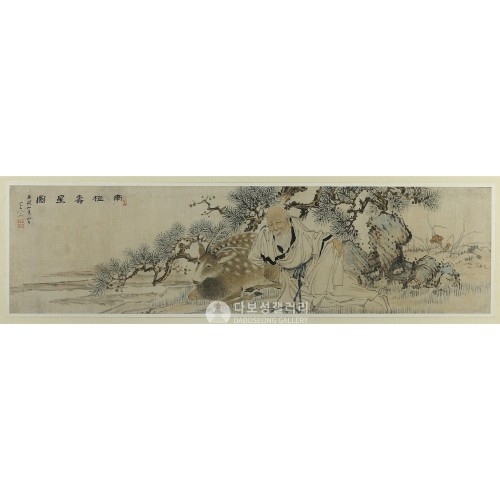
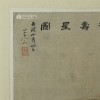
이당 김은호가 인간의 수명을 관장하는 남극성(南極星)을 신선처럼 의인화한 수성노인(壽星老人)을 그린 도석인물화입니다. 화면 좌측 상단의 ‘南極壽星圖’는 ‘남극의 수성노인을 그린 그림’이라는 뜻이며, ‘丙戌十月四日’은 ‘병술년 10월 4일’이라는 뜻으로 제작 시기를 추정할 수 있습니다. 관지와 낙관은 김은호가 사용한 전형적 형태와 일치합니다.
수성노인은 큰 이마와 긴 수염이라는 전통 도상을 따르면서도 과장된 표현을 배제하였고, 노송 아래에서 사슴과 마주한 온화한 모습으로 묘사되었습니다. 사슴, 소나무, 괴석은 모두 장수와 복록을 상징하는 길상 소재이며, 오랜 삶과 복을 기원하는 주제를 한층 강조합니다.
이 유물은 인물의 묘사와 사슴의 털결, 배경 자연을 처리한 수묵 표현이 조화롭게 어우러져 전통적 수성노인도를 현대적 감각으로 해석하였습니다. 김은호의 수성노인도 가운데에서도 표현의 완성도와 조형적 균형이 돋보이는 수작으로 평가됩니다.
이당 김은호 약력
1892 인천 출생
1918 조선서화협회 참여
1920 창덕궁 대조전 벽화《백학도》제작
1921 제 1회《서화협회전》참가
1922 제 1회《조선미술전》참가
1928 순종 어진 제작
1935~1946 세종, 원종 어진 모사
1936 조선미술원 설립, 후소원 결성
1937《금차봉납도》제작
1941 조선미술가협회 일본화부 평의원
1943《애국백인일수전》등 전시 참여
1949 제 1회 국전 추천작가, 4회부터는 심사위원으로 활동
1960 채색산수화 (화풍 변화)
1962 문화훈장 대통령상
1965 3.1 문화상 예술부문 본상
1968 대한민국 예술원상
1970 강렬 채색 현대적 풍경화 (화풍 변화)
1971 서울신문사 주최 동양화가 6대가에 선정 출품
1972 작고
1976 민족문화상 본상, 서울시문화상
━━━━━
本作品为以堂金殷镐将主管人类寿命的南极星拟人化为仙人形象的寿星老人之道释人物画。画面左上方题写“南極壽星圖”,意为“描绘南极寿星老人的图画”;“丙戌十月四日”指“丙戌年十月初四”,可据此推断作品的创作年代。画中的款识与钤印均与金殷镐惯用形式相一致。
寿星老人遵循高额长须的传统图像特征,但并未采用夸张表现,而是描绘为在苍松之下与灵鹿相对、神情温和安详的形象。鹿、松树与奇石皆为象征长寿与福禄的吉祥题材,进一步强化了祝愿长生与福运的主题内涵。
作品在人物刻画、鹿的毛发质感以及背景自然景物的水墨处理上相互协调,将传统寿星图以现代审美意识加以诠释。在金殷镐的寿星老人题材作品中,本作以其高超完成度与稳健的造型平衡,被评价为具有代表性的佳作。
以堂 金殷镐 生平简历
1892年 出生于仁川
1918年 参与朝鲜书画协会活动
1920年 制作昌德宫大造殿壁画《百鹤图》
1921年 参加第一届《书画协会展》
1922年 参加第一届《朝鲜美术展览会》
1928年 制作纯宗御真
1935~1946年 临摹世宗、元宗御真
1936年 创立朝鲜美术院,结成“后素会”
1937年 创作《金次奉纳图》
1941年 任朝鲜美术家协会日本画部评议员
1943年 参加《爱国百人一水展》等展览
1949年 被推选为第一届国展推荐作家,第四届起担任评审委员
1960年 创作彩色山水画(画风转变)
1962年 获文化勋章总统奖
1965年 获“三一文化奖”艺术部门大奖
1968年 获大韩民国艺术院奖
1970年 创作强烈色彩的现代风景画(画风转变)
1971年 入选《首尔新闻社主办东方画家六大家》展
1972年 逝世
1976年 追授民族文化奖本奖、首尔市文化奖
━━━━━
This work is a Daoist figure painting by Idang Kim Eun-ho, depicting the God of Longevity, the personification of the South Pole Star, which is believed to govern human lifespan. The inscription ‘南極壽星圖’ at the top left of the painting translates to ‘Painting of the God of Longevity of the South Pole,’ and the date ‘丙戌十月四日 (October 4th of the Byeongsul year)’ allows for an estimation of its production date. The signature and seal are consistent with the typical forms used by Kim Eun-ho.
The God of Longevity is depicted following traditional iconography, featuring a large forehead and long beard, yet the artist eschewed exaggerated expressions in favor of a gentle, benevolent demeanor. The figure is portrayed facing a deer beneath an old pine tree. The deer, pine tree, and strange rock are all auspicious symbols representing longevity and fortune, further emphasizing the theme of wishing for a long and blessed life.
This piece harmoniously blends the detailed depiction of the figure, the delicate texture of the deer’s fur, and the ink wash treatment of the natural background, interpreting the traditional Painting of the God of Longevity with a modern sensibility. Among Kim Eun-ho’s paintings of the God of Longevity, this work is evaluated as a masterpiece, distinguished by its high level of completeness and formative balance.
Biography of Idang Kim Eun-ho
1892: Born in Incheon.
1918: Participated in the Calligraphy and Painting Association of Joseon.
1920: Produced the mural Painting of White Cranes for the Daejojeon Hall of Changdeokgung Palace.
1921: Participated in the 1st Exhibition of the Calligraphy and Painting Association.
1922: Participated in the 1st Joseon Art Exhibition.
1928: Produced the Royal Portrait of Emperor Sunjong.
1935–1946: Replicated the Royal Portraits of King Sejong and King Wonjong.
1936: Established the Joseon Art Academy Joseon Misulwon and formed the Huso-won group.
1937: Produced Painting of Offering Gold Hairpins.
1941: Served as a councilor for the Japanese Painting Section of the Joseon Artists Association.
1943: Participated in exhibitions such as the Patriotic Hyakunin Isshu Exhibition.
1949: Selected as a Recommended Artist for the 1st National Art Exhibition; served as a judge from the 4th exhibition onwards.
1960: Shifted artistic style to colored landscape painting.
1962: Awarded the Order of Cultural Merit (Presidential Award).
1965: Received the Main Award in the Arts Category of the March 1st Cultural Award.
1968: Received the National Academy of Arts Award.
1970: Shifted style to intensely colored modern landscapes.
1971: Selected as one of the "Six Great Oriental Painters" by the Seoul Shinmun and exhibited works.
1972: Passed away.
1976: Posthumously awarded the Main Award of the National Culture Award and the Seoul City Cultural Award.