본문
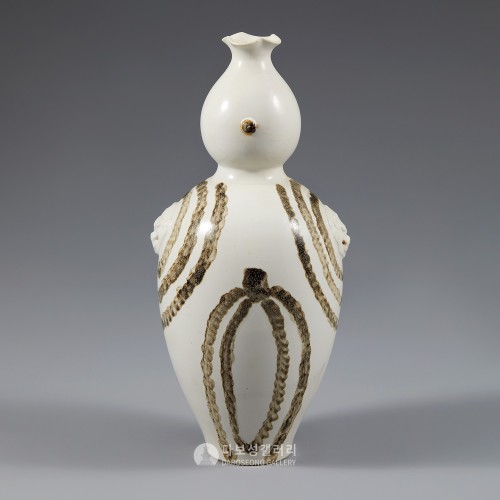
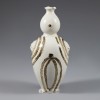
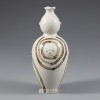
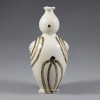
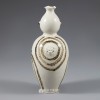
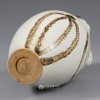
꽃잎 모양으로 벌어진 화구(花口)를 갖춘 호리병(葫蘆甁)형 백자 병입니다. 목은 부풀고 좁은 어깨를 지나 동체가 다시 팽창한 뒤 저부로 갈수록 좁아집니다. 목에는 작은 원형 문양을 첩화하였고, 동체 양측에는 서수형 쌍이를 부착하였습니다. 산화철을 안료로 한 갈유를 사용하여 문양을 시문하였습니다. 철유는 수·당대 백자에서 널리 사용된 기법으로, 순백의 바탕과 대비를 이룹니다.
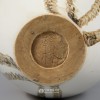
굽 바닥에는 '翰林(한림)' 명문이 새겨져 있습니다. 이는 당대 형요에서 황실에 공납하기 위해 제작한 유물에 새겨진 대표적인 표식입니다. 개원(開元) 연간 이후 제작된 것으로 알려져 있습니다. '盈(영)' 명문 백자에 비해 희소하며, 당나라 멸망 이후 더 이상 제작되지 않아 자료적 가치가 높습니다. 또한 형요 백자는 해상 실크로드를 통해 해외로 활발히 수출되어 당나라를 대표하는 수출 도자로도 알려져 있습니다. 당시의 정치·경제와 대외 교류를 연구하는 중요한 자료입니다.
瓶花口,葫芦身。颈部鼓起,溜肩,鼓腹,腹以下渐收。颈部贴饰小圆形纹样,腹部两侧附饰一对瑞兽形耳。器身以含氧化铁的褐釉绘饰纹样。铁釉是隋唐时期白瓷装饰中广泛采用的技法,与洁白的瓷胎形成鲜明对比。
圈足底部刻有“翰林”款识。“翰林”款是唐代邢窑为进贡皇室而烧造瓷器上的常见标识,一般认为烧造于开元年间(713~741年)以后。相较于更为常见的“盈”字款白瓷,“翰林”款存世数量更为稀少,且随着唐朝灭亡而停止烧造,因此具有较高的文献与研究价值。此外,邢窑白瓷还通过海上丝绸之路远销海外,是唐代最具代表性的外销瓷之一,为研究当时的政治、经济及对外交流提供了重要的实物资料。
This white porcelain flask is fashioned in the form of a gourd-shaped bottle with a petal-shaped flared mouth. The neck swells outward before narrowing at the shoulders, while the body expands again and gradually tapers toward the foot. Small circular appliqué ornaments decorate the neck, and a pair of mythical-beast-shaped lugs is attached to either side of the body. Brown iron glaze, using iron oxide as the pigment, was applied to create the decorative motifs. Iron-painted decoration was widely employed on white wares during the Sui and Tang dynasties, producing a striking contrast against the pure white body.
An inscription reading "翰林 (Hanlin)" is incised on the base. This is one of the representative marks found on wares produced at the Xing Kiln for tribute to the imperial court. The piece is believed to have been made after the Kaiyuan era. Compared with Xing wares bearing the "盈 (Ying)" mark, examples with the "Hanlin" inscription are considerably rarer. Production ceased after the fall of the Tang dynasty, making such pieces especially valuable as historical materials. Xing white wares were also actively exported overseas via the Maritime Silk Road and are recognized as one of the representative export ceramics of the Tang dynasty. As such, they provide important evidence for the study of the political, economic, and international exchanges of the period.