본문
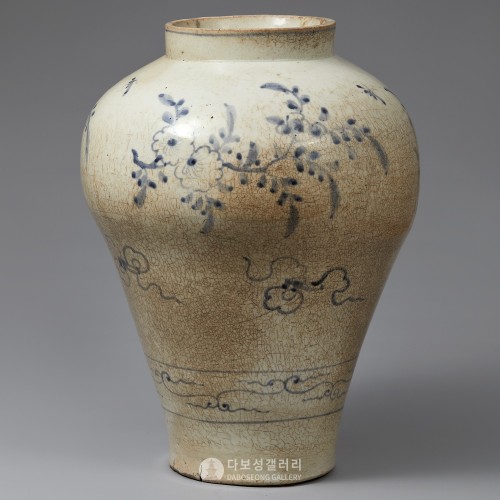
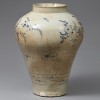
18세기 조선 후기에 제작된 백자 호입니다. 구연은 직립하고 어깨가 풍만하게 부풀었다가 저부로 갈수록 좁아지는 형태입니다. 굽은 안쪽을 깎아낸 안굽입니다.
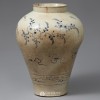
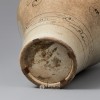
문양은 청화안료로 시문하였습니다. 중앙에는 꽃과 풀 사이를 날아다니는 곤충을 표현한 화충문(花蟲紋)을 시문하였습니다. 구연부와 저부에는 선을 돌렸고, 저부의 두 줄 선 사이에 덩굴문을 장식하였습니다. 청화안료의 섬세한 필치와 농담 표현이 잘 나타납니다. 전면에 유백색 유약을 입혀 구웠으며, 굽바닥에는 모래를 받쳐 구운 흔적이 남아 있습니다.
18세기에는 백자의 문양으로 초화문(草花紋)과 초충문(草蟲紋) 등이 유행하였습니다. 당시 경기도 광주의 금사리 가마는 사옹원 분원 체계 아래 왕실용 백자를 제작하며 유백색과 설백색의 양질 백자를 생산하였습니다. 이 백자 역시 기형과 유색, 문양 구성, 청화 안료의 필치 및 농담 표현 등을 종합적으로 고려할 때 18세기 금사리 가마에서 제작된 것으로 추정됩니다.
━━━━━
白瓷壶制作于18世纪朝鲜后期。直口,丰肩,肩向下渐收至底部,圈足内凹。
以青花釉料绘制纹样。器身中央饰有花虫纹,表现昆虫在花草之间飞舞的景象。口沿部与近底部饰有线纹,底部两道线纹之间装饰缠枝纹。青花颜料运笔细腻,浓淡层次表现丰富。通体施乳白色釉烧制,圈足底部留有垫砂烧成的痕迹。
18世纪时期,花草纹与草虫纹等题材广泛流行于白瓷装饰之中。当时位于京畿道广州的金沙里窑场,隶属于司饔院分院体系,专门烧造供王室使用的白瓷,并生产乳白色与雪白色等高品质白瓷。综合本器的器形、釉色、纹饰构成,以及青花颜料的笔法与浓淡表现等特征推断,应出于18世纪金沙里窑场。
━━━━━
This white porcelain jar was produced in the late Joseon period during the 18th century. The mouth rim stands upright, while the shoulder swells generously before gradually narrowing toward the base. The foot is an inner recessed foot with the interior carved away.
The decorative motifs were rendered in underglaze cobalt-blue pigment. At the center, a 'Flower and Insect' design depicting insects flying among flowers and grasses is painted. Lines encircle the mouth rim and lower body, while a vine pattern decorates the space between the two lines near the base. The delicate brushwork and tonal gradation of the cobalt-blue pigment are clearly evident. The entire surface was covered with a milky-white glaze before firing, and traces of sand support used during firing remain on the underside of the foot.
During the 18th century, motifs such as 'Grass and Flower' and 'Grass and Insect' designs were popular decorative themes on white porcelain. At the time, the Geumsari kiln in Gwangju, Gyeonggi Province, operated under the branch kiln system of the Saongwon and produced high-quality royal white porcelains characterized by milky-white and snow-white tones. Considering its form, glaze color, compositional arrangement of motifs, and the brushwork and tonal gradation of the cobalt-blue pigment, this porcelain jar is likewise presumed to have been produced at the Geumsari kiln in the 18th century.